How Zaha Hadid Architects and MSquared Are Redefining the Future of Cities With Social Digital Twins
By MSquared | 27 November 2025
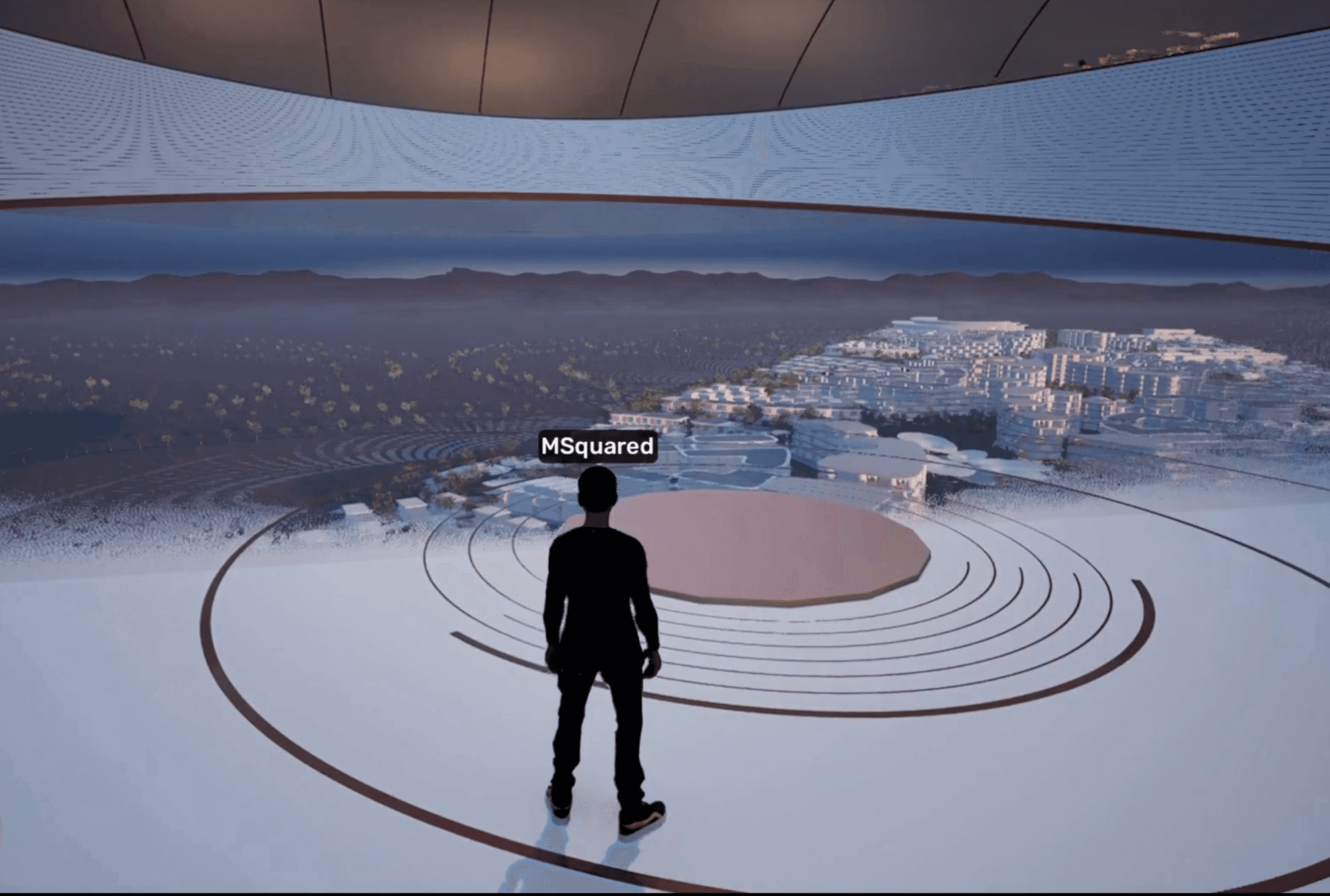
Cities are changing fast. Growing populations and new sustainability pressures mean developers need tools that help them design spaces people genuinely want to live and work in.
In a recent webinar, the team at Zaha Hadid Architects joined MSquared to discuss how social digital twins, real time environments and game engine workflows are beginning to shape the next generation of urban development. The session also covered how we brought this to life through our recent project, where Zaha Hadid Architects used our platform to build a persistent digital twin of Khalid Bin Sultan City.
KBS City: A Social Digital Twin for the Real Estate Market
The Khalid Bin Sultan City project in Sharjah, developed by Zaha Hadid Architects for the BEEAH Group, showed how this can work in practice. Using MSquared’s Morpheus and Avatars platforms, the team built a social digital twin of the district.
During the webinar, Zaha explained how this approach marked a step change in how they work. Shajay Bhooshan, Associate Director at Zaha Hadid Architects, noted that the aim was to let future residents and stakeholders
“navigate as they might once the building is built” and to “register their preferences and their annoyances while there is still time to modify what is coming.”
Unlike traditional digital twins which focus on engineering and operational data, this version centred on human behaviour. How people move. Where they gather. Which layouts feel active or calm. How a district evolves when future residents influence the plan before construction begins.
Why Social Digital Twins Matter for Sustainability
During the webinar, Shajay summarised the value and importance of social digital twins clearly:
“One of the founding pillars of sustainability is building things people like, so they do not need to be torn down before the expiration date is up.”
Most occupants have no influence over the buildings they eventually use. This leads to costly redesigns, lower satisfaction and unnecessary material waste. Social digital twins offer a way to involve communities and stakeholders earlier, giving them space to explore ideas, register preferences and flag issues long before a building is delivered.
This supports:
• Longer building lifecycles
• Higher satisfaction and occupancy rates
• Better use of materials
• Stronger commercial viability
Conclusion: Social Digital Twins Will Redefine How Cities Are Designed
The collaboration between Zaha Hadid Architects and MSquared marks a pivotal moment in the evolution of digital design.
It demonstrates that immersive, real time environments are no longer experimental add ons. They are becoming a core pillar of architectural practice. As Shajay noted,
it is truly a technology and an opportunity space that is very aligned with architectural design and urban design. And so literally all architects and all urban designers will be excited by this. (sic)
The implications stretch far beyond individual projects. As tools like these become more accessible, cities can become participatory ecosystems where residents, policymakers, designers and investors co create in real time.
This more open model of planning can accelerate public engagement, reduce project risk and ensure that urban environments are shaped by the people who will inhabit them, not only by those who finance or approve them.
Social digital twins are not simply a new tool. They represent a shift in design philosophy, one that places people at the centre, embraces continuous iteration and supports a more sustainable, inclusive and intelligent future for our cities.
In the coming weeks, we will share a video of the highlights from the webinar, showcasing more of the discussion and the ideas behind this work.